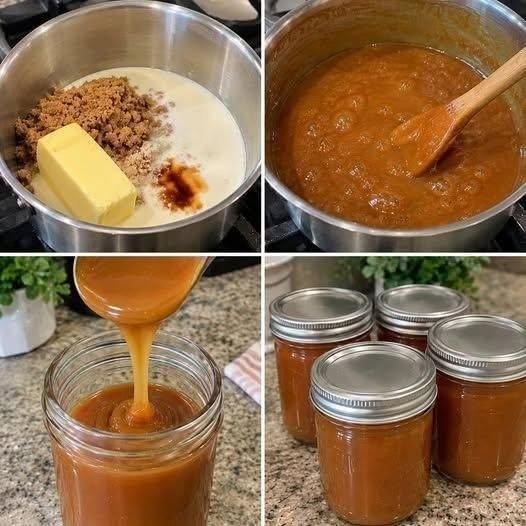
| Metric | Details |
| Prep Time | 2 minutes |
| Cook Time | 12 minutes |
| Cooling Time | 15 minutes (to thicken) |
| Total Time | 29 minutes |
| Yield | 1 ¼ cups (about 10 two-tablespoon servings) |
| Difficulty / Intensity | Intermediate / High Attention (Requires constant watching and quick whisking) |
| Heat Intensity | Medium to Medium-High — steady stovetop simmer around 340°F to 350°F (170°C to 175°C) |
| Equipment Needed | Heavy-bottomed 3-quart light-colored saucepan, heat-resistant silicone spatula or whisk, glass storage jar |
Ingredients
-
1 cup (200 g) granulated white sugar (standard fine white sugar melts evenly without burning)
-
6 tablespoons (85 g) unsalted butter, cut into 6 equal pieces and brought to room temperature
-
½ cup (120 ml) heavy whipping cream, at room temperature
-
½ teaspoon pure vanilla extract (optional, for warm aroma)
-
½ teaspoon flaky sea salt or fine kosher salt (increase to ¾ teaspoon for salted caramel)
The Science Behind Foolproof Caramel
Making caramel relies on pyrolysis—the thermal decomposition of sugar molecules as they heat past 320°F (160°C). Unlike baking a cake, caramelization happens rapidly in the final 60 seconds of cooking, shifting from pale gold to deep mahogany and then to burnt bitterness in a heartbeat.
Using a light-colored stainless steel or enameled pan is the single biggest advantage you can give yourself. Dark nonstick pans hide the true color of the sugar, making it nearly impossible to tell when it reaches the ideal copper-penny hue. Furthermore, bringing your butter and heavy cream to room temperature prevents a violent temperature shock when they hit the molten sugar, reducing splattering and stopping the sugar from seizing into hard clumps.
Step-by-Step Instructions
-
Prep all ingredients before turning on the stove. Measure out your granulated sugar, slice the room-temperature butter into six chunks, and pour the room-temperature heavy cream into a liquid measuring cup near the burner. Caramel moves fast, so having everything within arm’s reach is essential.
-
Melt the sugar over medium heat. Pour the granulated sugar evenly across the bottom of a heavy-bottomed 3-quart saucepan over medium heat. Let it sit undisturbed for 2 to 3 minutes until the edges begin to liquefy and turn clear.
-
Stir continuously as the sugar clumps and melts. Once the edges melt, begin stirring gently with a heat-resistant silicone spatula or wooden spoon. The sugar will form hard, dry lumps before gradually melting into a smooth, translucent, golden-amber liquid. Keep the heat at medium so the sugar does not scorch.
-
Watch for the deep amber color. Stop stirring once all sugar crystals have dissolved and swirl the pan gently by the handle. Continue cooking for 1 to 2 minutes until the liquid turns a rich, deep copper-amber color (similar to an old copper penny) and smells lightly toasted.
-
Whisk in the butter immediately. As soon as the sugar reaches deep amber, remove the pan from the heat or reduce to low, and carefully drop in the butter pieces. The mixture will bubble vigorously—whisk briskly for 1 to 2 minutes until all the butter is fully incorporated into the sugar.
-
Stream in the heavy cream slowly. Remove the pan from the heat completely. Slowly pour the heavy cream into the saucepan in a thin, steady stream while whisking constantly. The caramel will rise up and steam intensely; keep whisking until the bubbling subsides and the sauce turns smooth and glossy.
-
Finish with salt and vanilla. Whisk in the flaky sea salt and pure vanilla extract until fully dissolved. Let the caramel cool in the pan for 10 to 15 minutes—it will look thin while hot, but it thickens dramatically into a rich, spoon-coating glaze as it cools.
Troubleshooting & Pro Tips
-
Why did my caramel turn grainy? Sugar crystallization happens when stray sugar crystals on the side of the pan fall back into the melted syrup. If you see crystals forming on the pan walls, wipe them down carefully with a wet pastry brush, or avoid vigorous stirring until the sugar starts melting.
-
What if the sugar clumps when I add cold butter or cream? Do not panic! If your dairy was slightly too cold and the sugar hardens into a lump, simply place the saucepan back over low heat and stir gently. The hardened sugar will slowly dissolve back into the cream within 3 to 4 minutes.
-
Bourbon or Espresso Twist: Stir in 1 tablespoon of bourbon alongside the vanilla for a grown-up dessert sauce, or dissolve 1 teaspoon of instant espresso powder into the warm cream before pouring it in for mocha caramel.
-
Safety First: Molten sugar reaches temperatures above 340°F (170°C), which is hotter than boiling water and sticks to skin. Always use a long-handled whisk or spatula and keep children and pets away from the stove while adding the cream.
Storage & Reheating
-
Refrigerator: Transfer the cooled caramel sauce into an airtight glass mason jar or container. It keeps fresh in the refrigerator for up to 3 weeks. Because of the high butter and cream content, the sauce will firm up to a thick fudge-like consistency when chilled.
-
Freezer: Store in a freezer-safe jar (leaving ½ inch of headspace for expansion) for up to 3 months. Thaw overnight in the fridge before warming.
-
Reheating: Scoop out the desired amount into a microwave-safe bowl and heat in 10- to 15-second bursts, stirring between intervals, until warm and pourable. Alternatively, set the glass jar in a bowl of warm tap water for 5 to 10 minutes.
Nutrition Information
Nutritional values are calculated per 2-tablespoon serving (yields approximately 10 servings).
| Nutrient | Amount per Serving | % Daily Value* |
| Calories | 182 kcal | 9% |
| Total Fat | 11.4 g | 15% |
| Saturated Fat | 7.1 g | 36% |
| Trans Fat | 0.4 g | — |
| Cholesterol | 34 mg | 11% |
| Sodium | 124 mg | 5% |
| Total Carbohydrates | 20.4 g | 7% |
| Dietary Fiber | 0 g | 0% |
| Total Sugars | 20.3 g | — |
| Added Sugars | 20.0 g | 40% |
| Protein | 0.4 g | 1% |
| Calcium | 10 mg | 1% |
| Potassium | 14 mg | 0% |
